
Aeration is usually the largest energy cost of a biological wastewater plant. Fine bubble diffusers release air as small bubbles at the bottom of the tank: a small bubble rises slowly and has more surface per volume of air, so more oxygen dissolves into the water for the same blower power. We supply fine bubble diffusers for new plants and retrofits, together with the Toray MBR membranes and the rest of the MBR plant. Send us the tank sizes and the wastewater load, and we help select the diffusers.
Fine Bubble Diffusers for Wastewater Aeration
Membrane disc and tube diffusers that put oxygen into activated sludge, MBR, equalization and digester tanks with less blower energy.
How fine bubble aeration works
Membrane diffusers
A flexible membrane, commonly EPDM, is perforated with many small slits. Air from the blower opens the slits and leaves as fine bubbles; when the air stops, the slits close and keep sludge from entering the diffuser.
Discs and tubes
Disc diffusers are spread across the tank floor in a grid. Tube diffusers mount on the air headers and cover more length per unit. Both connect to a submerged air piping grid.
Fine versus coarse bubble
Coarse bubble diffusers move more water and resist clogging, so they are used for mixing and for scouring MBR membranes. Fine bubble diffusers transfer more oxygen per unit of air, so they are preferred where the goal is dissolved oxygen for the bacteria.
Blowers and control
A blower feeds the diffuser grid. Controlling the air with a dissolved oxygen reading keeps the blower running only as hard as the process needs.
Where they are used
Activated sludge and MBR bioreactors
Oxygen for the bacteria that break down organic matter. Toray's "F" MBR modules come with an EPDM fine bubble diffuser for membrane scouring.
Equalization tanks
Keep the incoming wastewater mixed and fresh so it does not turn septic and smell while it waits for treatment.
Aerobic sludge digesters
Stabilize excess biological sludge before dewatering or disposal.
Aerated lagoons and upgrades
Add treatment capacity to an existing lagoon or tank, or replace worn diffusers in a plant that no longer meets its discharge limits.
Water reuse plants
The biological stage ahead of ultrafiltration and reverse osmosis in a reuse train.
Toray MBR modules with fine bubble diffusers
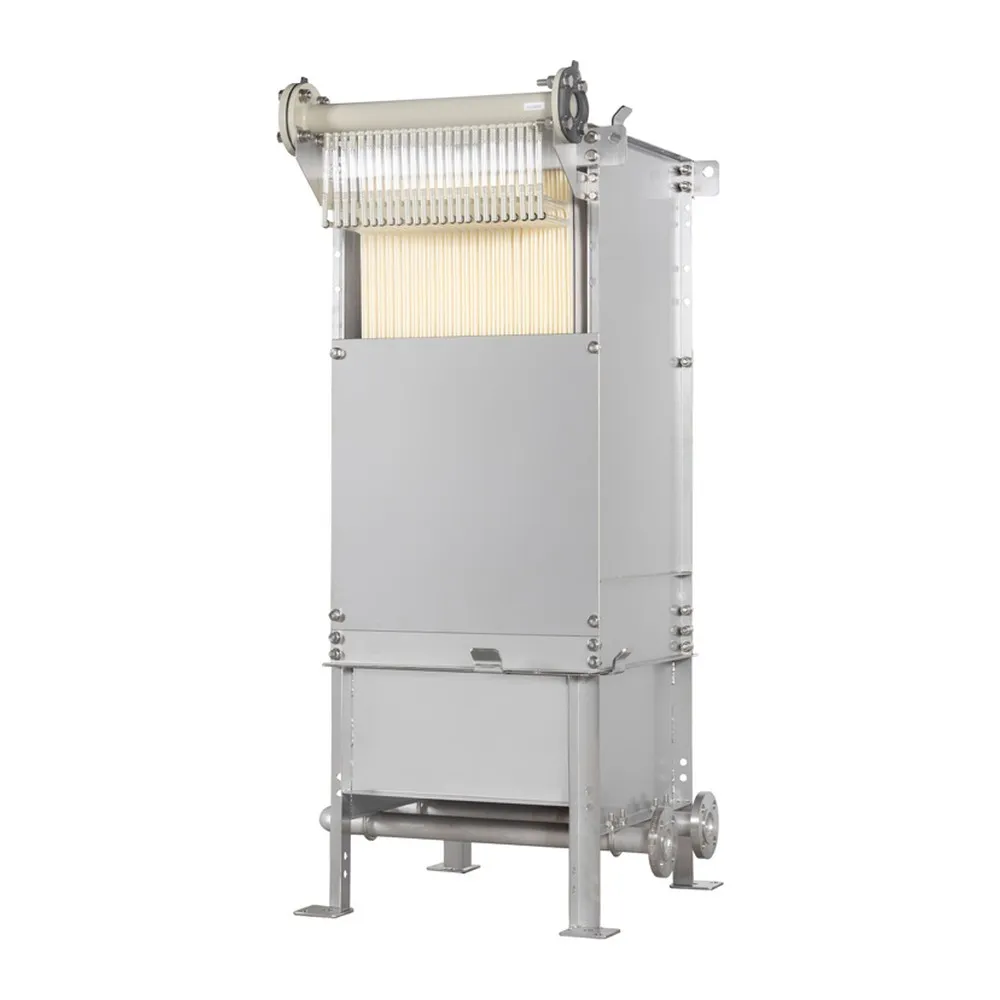
Toray® MBR Membrane Module NHPA050
Toray NHPA050 submerged MBR module: 50 elements and 35 m² (377 ft²) of membrane, 0.08 µm PVDF flat-sheet membranes for municipal and industrial wastewater treatment and reuse.
- NHPA050-1C
- NHPA050-1F
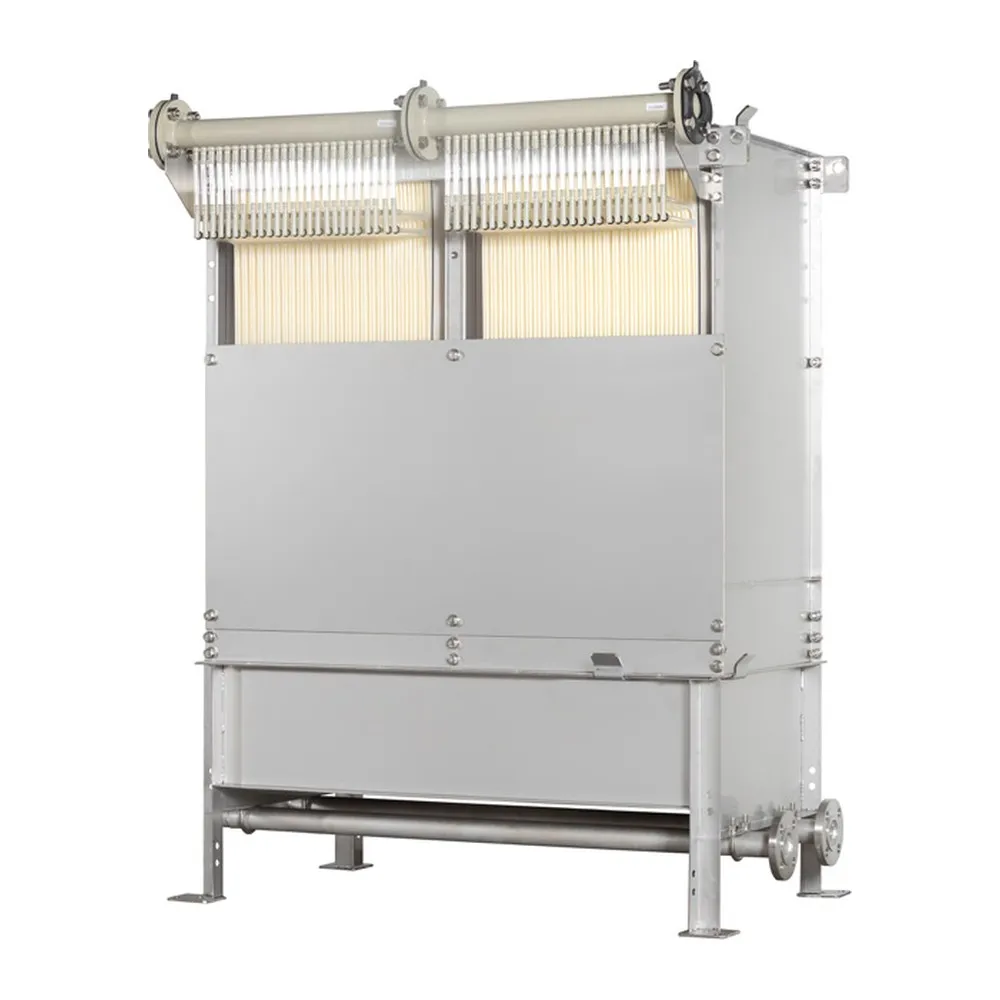
Toray® MBR Membrane Module NHPA100
Toray NHPA100 submerged MBR module: 100 elements and 70 m² (753 ft²) of membrane, 0.08 µm PVDF flat-sheet membranes for municipal and industrial wastewater treatment and reuse.
- NHPA100-1C
- NHPA100-1F
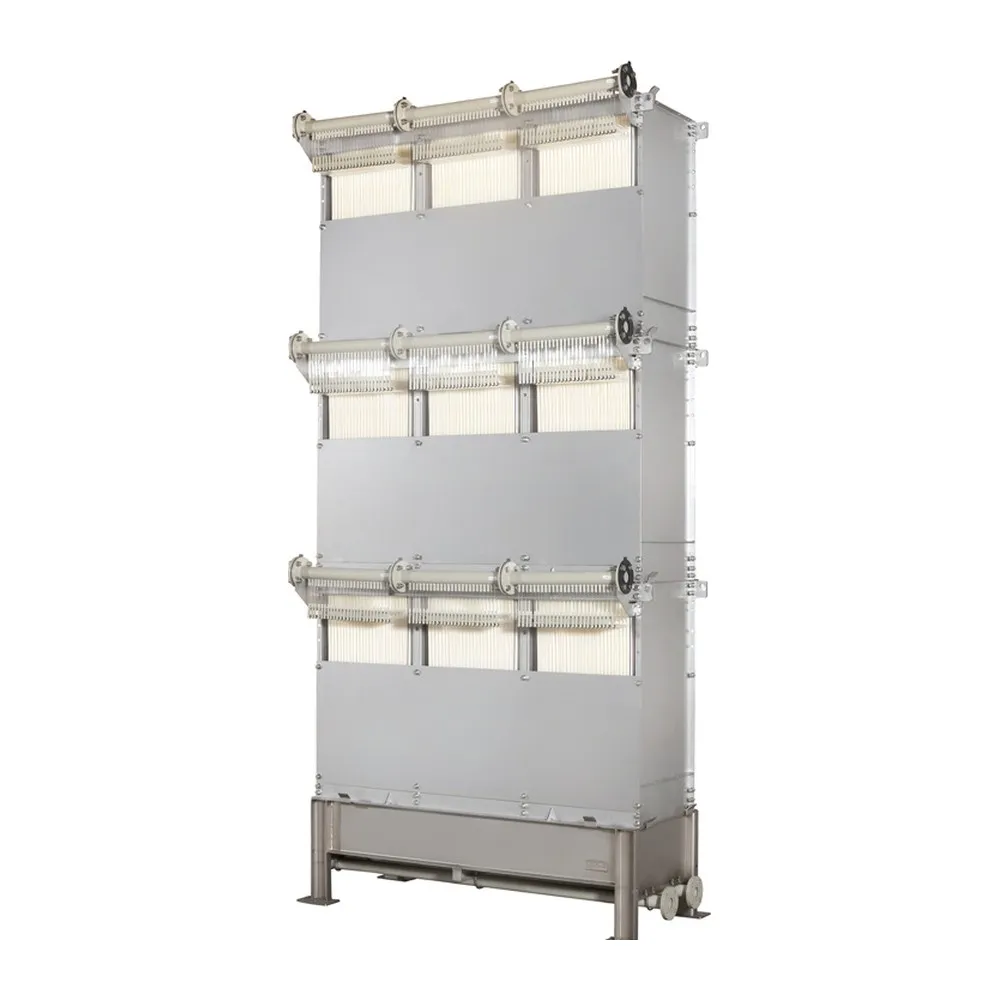
Toray® MBR Membrane Module NHPA150
Toray NHPA150 submerged MBR module: 150 to 600 elements, 105 to 420 m² (1,130 to 4,521 ft²) of membrane, 0.08 µm PVDF flat-sheet membranes for municipal and industrial wastewater treatment and reuse.
- NHPA150-1C
- NHPA150-2C
- NHPA150-3C
- NHPA150-4C
- NHPA150-1F
- +3 more
Catalog pages
 MBR Membranes6 product lines
 Ultrafiltration Membranes9 product lines
 Monitors & Testers39 product lines
What to send us for a quote
The more of this you can send, the faster and closer the quote. If you do not have a water analysis, tell us and we will say what to measure.
- Process
- Activated sludge, MBR, equalization, digester or lagoon.
- Flow and load
- Daily flow and the BOD (and nitrogen, if it must be removed) of the wastewater.
- Tank sizes
- Length, width and water depth of each tank, and whether it is built or in design.
- Current aeration
- For a retrofit, the type and number of diffusers and the blower you have now.
- Location
- Country and city, to plan shipping.
Related industries and applications
MBR Wastewater Treatment with Toray Membranes
Toray flat-sheet MBR modules and replacement cassettes for municipal, industrial and food processing wastewater, shipped from Florida.
Water Reuse with MBR, Ultrafiltration and Reverse Osmosis
Treat wastewater once more and use it again for irrigation, washing, toilet flushing, cooling towers and boilers, with Toray membranes shipped from Florida.
Water Treatment for Food and Beverage
Product water for bottled water, beverages and breweries, process and boiler water, and wastewater treatment with MBR and reuse, shipped from Florida.
Water Treatment for Mining
Drinking water for camps, process water, mine and camp wastewater, and water reuse, with Toray membranes shipped from Florida.
Common questions
What is a fine bubble diffuser?
A device at the bottom of an aeration tank that releases blower air as very small bubbles through a perforated membrane. Small bubbles dissolve more oxygen per unit of air than coarse bubbles, which lowers the energy needed to aerate a biological process.
Fine or coarse bubble diffusers?
Fine bubble for supplying oxygen to the biological process, where energy efficiency matters most. Coarse bubble for mixing, for tanks with heavy solids or grease, and for scouring MBR membranes. Many plants use both.
How many diffusers does a tank need?
It is calculated from the oxygen demand of the wastewater (its flow and BOD), the water depth and the floor area. Send us those data and we help select the number and layout.
Can fine bubble diffusers be added to an existing plant?
Often yes. Replacing surface aerators or coarse bubble diffusers with fine bubble diffusers in the bioreactor is a common upgrade to cut energy or raise capacity, provided the blower and air piping are checked for the new layout.
Need a price or help choosing a part?
Tell us the part number or what you are trying to fix. We answer in English and Spanish and ship the same day from Pembroke Park, Florida.